
3 Ways to Unlock Your Creativity On Demand Using Neuroscience
The science behind why some creatives produce consistently while others wait for inspiration that never comes.

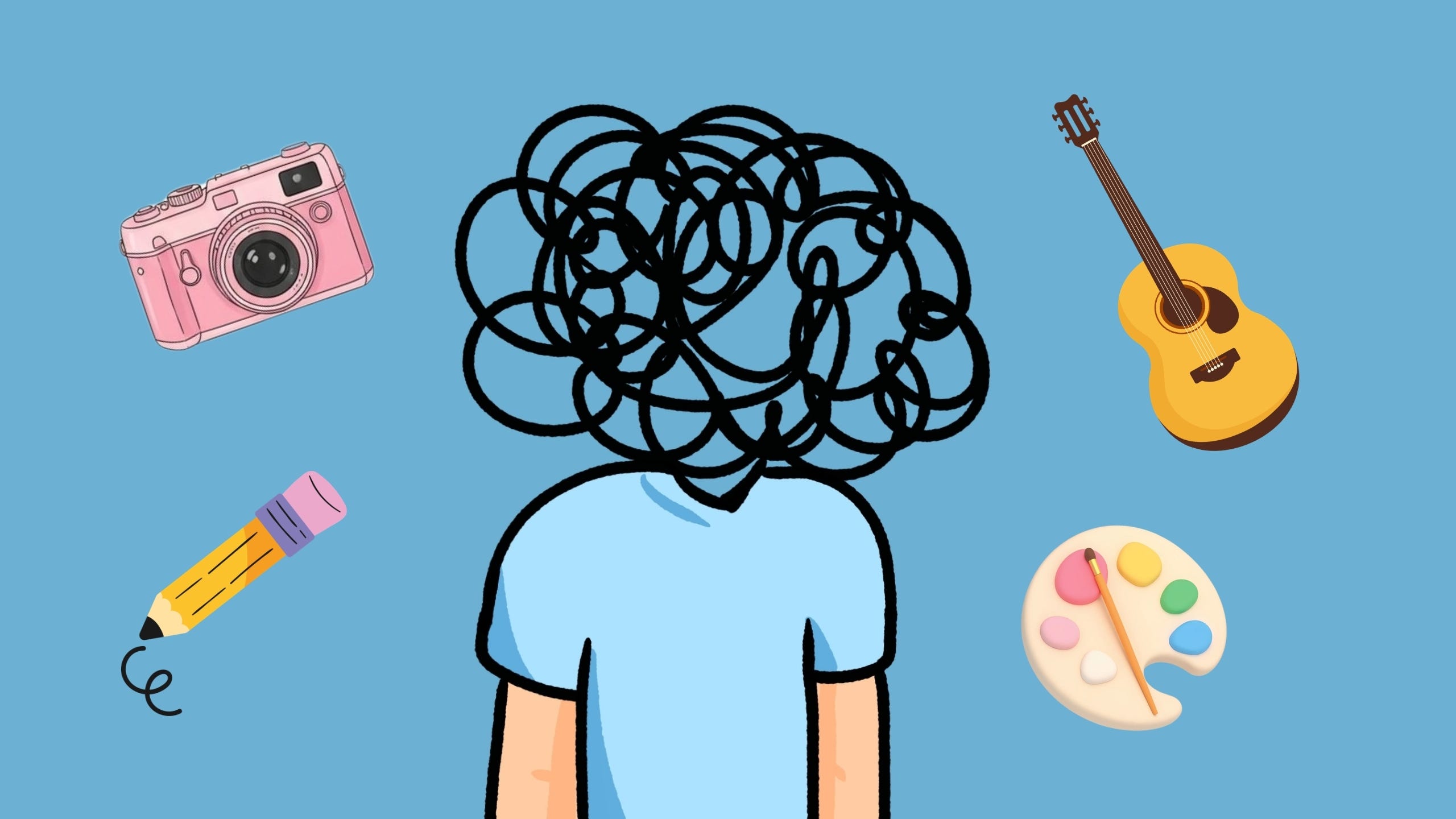
Every artist faces a familiar dilemma: how do you stay creative and productive every day or at least every week?
Whether you’re writing a novel, painting a canvas, or editing your latest photos, creativity doesn’t always show up on demand. Before you know it, weeks, months, even years, can pass before you realize you’ve thought about making something but have produced absolutely nothing.
For a long time, people have treated creativity like an elusive muse, one that might visit you or not, leaving you at its mercy.
But here’s the good news: creativity isn’t just something that happens to you. You can actually train your brain to tap into it regularly, and even on demand.
1) The Turf War Happening in Your Mind
A study by the National Science Foundation found that guitarists show heightened brain activity in the right hemisphere when playing music. Interestingly, this same part of the brain is also triggered during moments of panic or fight-or-flight responses.
This recent quote by Dr. Martha Beck on CNN highlights how making systematic, conscious choices to be creative can consistently put creativity in the driver’s seat.
“I started to see that neurologically, the opposite of anxiety seemed to be creativity. If you look at the two parts of the brain, they’re kind of mirrors. And it seemed to be that they toggled, when one is on, the other goes off.”
“I started to see that neurologically, the opposite of anxiety seemed to be creativity. If you look at the two parts of the brain, they’re kind of mirrors. And it seemed to be that they toggled, when one is on, the other goes off.”
So what does this mean for creativity? It suggests that creativity doesn’t have to come when we’re calm; it can actually be an antidote to a heightened state. It also means that sometimes creativity may have to fight for space in the brain. When we’re overstimulated, creativity might struggle to surface.
It stands to reason, then, that creativity has to be a choice, but once engaged it will override more painful emotions.
Emotions and mental states originate in specific parts of the brain, but they also quickly recruit other areas to collaborate. When you feel a strong emotion, multiple brain regions light up to process it.
So how do you win the creativity turf war happening in your brain? There is one key way to do this, as distinguished by neuroscience. Restfulness.
Ph.D. researcher Paul Deli found that when he was in a state of semi-lucidity, dozing but not fully asleep, his ideas, as ranked by his colleagues, became more creative.
Why? Because our brains are constantly juggling conscious and subconscious thoughts. Our brains are constantly trying to decide whether to yield to creativity or survival instincts. Conscious thoughts focus on survival: what we need to do next, what’s urgent. Subconscious thoughts handle emotions, ideas, and memories, things that fuel creativity.
As we enter a restful state, survival-based thoughts take a backseat, allowing creativity to surface more freely. You don’t have to be half-asleep to tap into this, but allowing yourself to experience a state of restfulness, even a little bit of fatigue, may allow creativity and a desire to create to emerge.
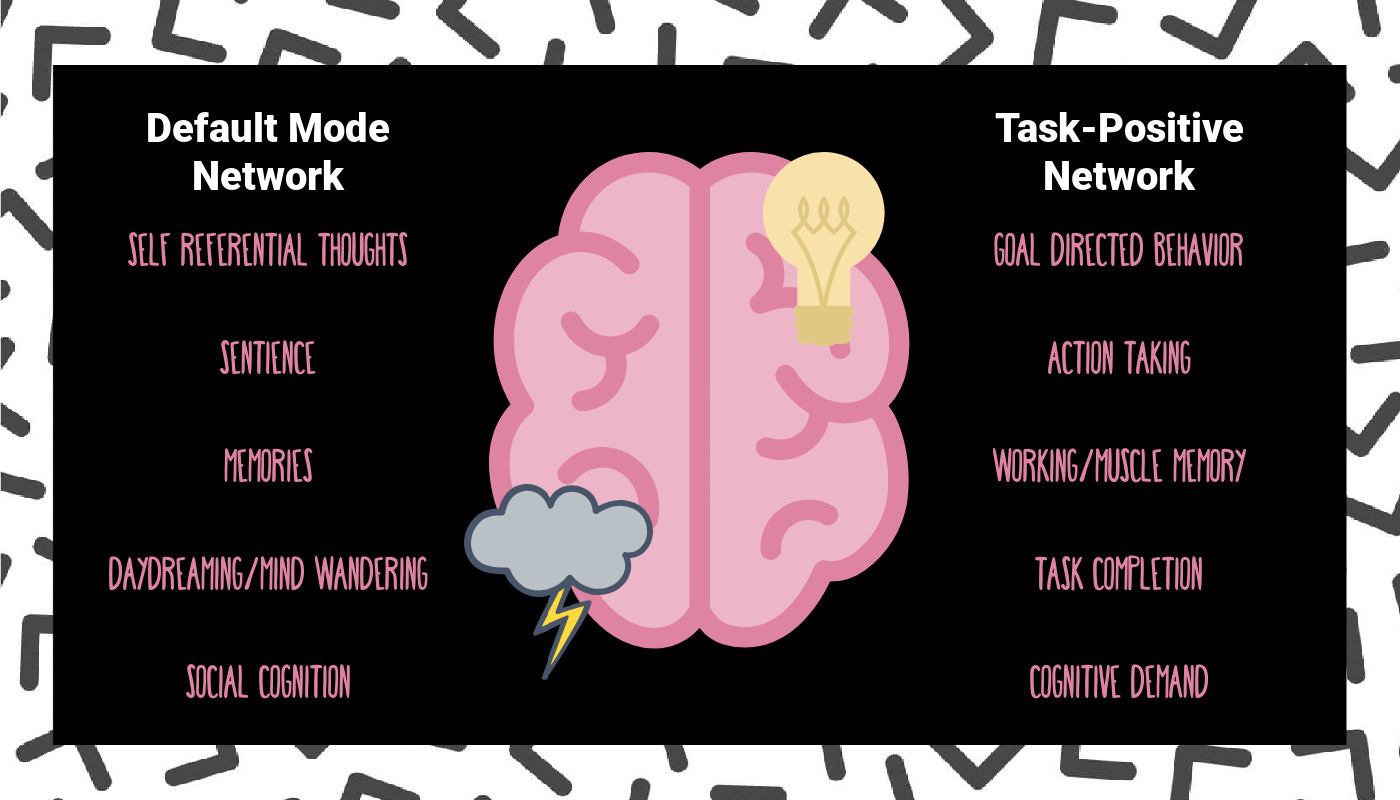
Taking this concept further, neurologist Marcus Raichle and his team identified the Default Mode Network (DMN), a state of mind that activates during rest, daydreaming, and imagination.
Its opposite of what was deemed the Task Positive Network (TPN), which takes over when you focus on goal-oriented tasks requiring high cognitive effort.
Your brain constantly shifts between these two modes. When you’re locked into logic-driven, task-focused thinking, creativity struggles to break through. Even if you’re procrastinating on a task, your brain may stay in TPN mode, anticipating when you’ll start, keeping the creative DMN out of reach.
The solution? Start by making space for creativity schedule time for DMN activities. Distinguish a time for a creative state of being and start by allowing your emotional state to downshift. Here are some tips to do this using science:
Attempt to enter a creative state 1-2 hours after eating. You’ll have nutrition to keep your mind going, but your heart rate will have lowered after the natural rate increase after eating.
Take some time to do some deep breathing exercises. Deep breathing tends to calm the vagus nerve, which is tied to our fight-or-flight response. This effectively begins to create a pathway towards creativity.
Eliminate electronically generated blue light before creating, try flipping through picture books that inspire you, or “warm up” by doing some gentle work with your hands or preparing your studio space.
Try progressive muscle relaxation (PMR). This involves tightening muscles and then letting them go. You can scrunch your toes as hard as you can and release, or scrunch your hand into a fist and relax. This is another way to send signals to your body that it’s time to go into a more creative mindset.
Think of it like a deep-sea diver: if they rise to the surface too quickly from deep pressure, they risk harm. Your mind needs time to transition between structured tasks and creative exploration.
By deliberately going through these rituals, we can begin to signal to our body that it’s time to let go of the technical worries of the day and shift into a creative mode. It is the first step for beginning a consistent creative practice that you are in control of.
2) The Home Court Advantage of Artists
The idea of rewiring your brain might sound ambitious, but thanks to neuroplasticity, it’s entirely possible.
Neuroplasticity is the brain’s ability to reorganize itself by forming new connections in response to experiences. Just like repeated exercise strengthens muscles, repeated mental activity strengthens neural pathways.
This isn’t just theory; it’s proven science. Neuroplasticity is used in stroke rehabilitation to help patients recover lost functions. When brain-body connections are damaged, rehabilitation retrains the brain to form new pathways, restoring movement and control.
For artists, this is a game-changer. If the brain can adapt to regain physical function, it can also build stronger connections to make creativity (or anything important to you) more accessible.
And guess what? You have a home court advantage. Research cited by Psychology Today shows that creative individuals tend to have highly adaptable neural networks, allowing them to see challenges from different angles. This adaptability isn’t just an innate trait; it can be developed through consistent practice.
By leveraging neuroplasticity, you don’t have to wait for inspiration to strike. You can build habits that make creativity a natural, consistent part of your life. As an artist, your brain is actually more open to rewiring, meaning you can develop new habits faster. All of this culminates in no longer waiting for creativity to strike, but instead being able to tap into creativity when you need or want to.
Most creatives already know that trying new techniques and pursuing sources of artistic inspiration helps spark ideas. This journey often inspires travel, browsing paints, and adapting new hands-on methods. The good news? These activities also strengthen neural pathways.
When you create art, go on hikes, visit new places, or learn new things, you’re literally improving your brain’s ability to focus and generate ideas. To boost your creativity long-term, set aside weekly time for these brain-strengthening activities. Even if you don’t feel inspired, show up and create anyway.
Relying on inspiration alone can make creative output unpredictable. But by committing to art as a practice that you intentionally engage in, you build strong neural pathways that make creativity more automatic.
As we wrap up this segment, it is worth remembering that different parts of the brain overlap, which is why creativity can get triggered during emotional highs and lows. It’s a common dilemma for artists to feel they’re only capable of creating when deeply sad or elated. The reality is that if you subscribe to that notion, you might be conditioning yourself to seek or come to rely on those extreme emotional states, which can be emotionally draining over time.
When you feel like you’re in the driver’s seat of your own creativity, you can inspire feelings of deep attunement instead of perpetually chasing after them.
3) Build a Creative Lifestyle
When you break it down, your lifestyle is simply a collection of habits you repeat most of the time. Many of them are so ingrained you don’t even think about them.
The key to being creative on demand? Make creativity a habit.
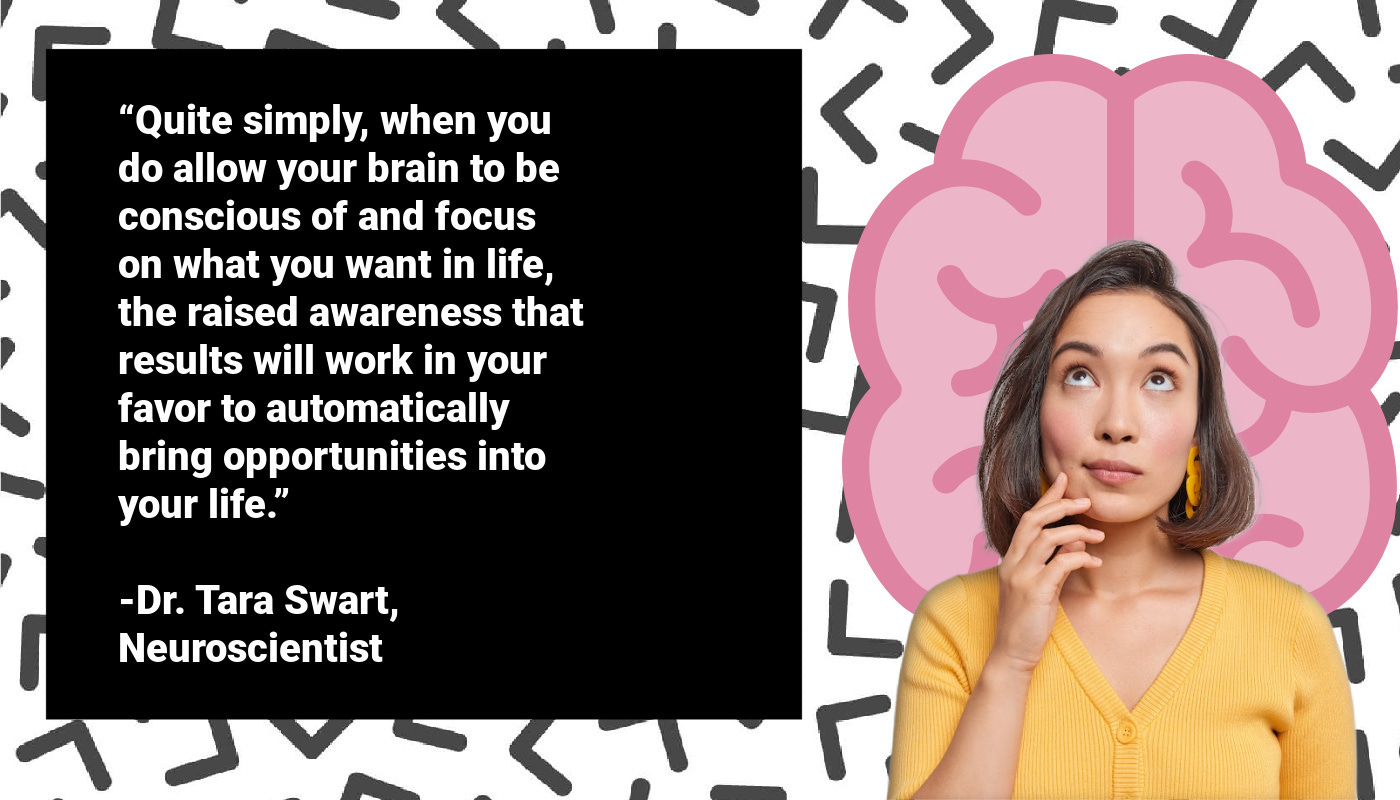
Like any skill, creativity takes time and effort to cultivate. Neuroscientist Tara Swart, a senior lecturer at MIT, explains in Neuroscience for Leadership that building new neural pathways takes up to 144 days. During this period, consistency is key.
Now that you’ve learned how to shift your body into creativity mode and shift into that mindset intentionally, it’s time to make creativity part of your routine.
We do that by designing your environment to support this practice.
Small, intentional changes can remove friction and make creativity effortless. For example, keeping your camera near your wallet and keys ensures it’s always within reach, or leaving your easel set up in a visible spot makes it easier to start painting whenever inspiration strikes. Having art supplies readily accessible eliminates the need for a lengthy set-up process that discourages you from getting to work.
In Atomic Habits, author James Clear goes into detail about habit formation:
“Whenever you want to change your behavior, you can simply ask yourself: How can I make it obvious? How can I make it attractive? How can I make it easy? How can I make it satisfying?”
“Whenever you want to change your behavior, you can simply ask yourself: How can I make it obvious? How can I make it attractive? How can I make it easy? How can I make it satisfying?”
If creativity is something you want to prioritize, structuring your environment to support it will help make it feel like a natural part of your daily life. Over time, these small adjustments will turn creativity from an occasional spark into a consistent, sustainable habit.
Control Your Creativity Like Never Before
It’s frustrating when you have creative ideas but can’t act on them consistently. Feeling dependent on random bursts of inspiration can make the creative process stressful and unpredictable.
But by understanding how your brain works, you can take control. You don’t have to wait for the right mood or mindset; you can train yourself to access creativity whenever you need it.
By making space for creativity, strengthening neural pathways, and making creative habits a natural part of your life, you’ll gain more control over your artistic output than ever before. No impulsive muse or mood swing required.
Gin Rogers
TikTok: GinRogers
References
Beck, M. (2025, February 15). Beyond anxiety: Wellness strategies with Martha Beck. CNN. https://www.cnn.com/2025/02/15/health/martha-beck-beyond-anxiety-wellness/index.html
American Psychological Association. (2022). The science of creativity: Exploring how creativity happens and how to boost it. Retrieved from https://www.apa.org/monitor/2022/04/cover-science-creativity
Clear, J. (n.d.). Atomic habits summary. Retrieved from https://jamesclear.com/atomic-habits-summary
Fox, M. D., & Raichle, M. E. (2007). Spontaneous fluctuations in brain activity observed with functional magnetic resonance imaging. Nature Reviews Neuroscience, 8(9), 700–711. Retrieved from https://pmc.ncbi.nlm.nih.gov/articles/PMC4142807/#:~:text=The%20default%20mode%20network%20(DMN,with%20no%20explicit%20task%20instruction
ScienceDirect. (n.d.). Default mode network. Retrieved from https://www.sciencedirect.com/topics/neuroscience/default-mode-network
Stroke Association. (n.d.). Neuroplasticity: Rewiring the brain after stroke. Retrieved from https://www.stroke.org.uk/stroke/effects/neuroplasticity-rewiring-the-brain
National Center for Biotechnology Information. (2020). Brain plasticity: Evidence and application to clinical practice. R